IP Camera vs CCTV: What's the Difference and Which Does Your Business Need?
Choosing the right surveillance system is not simply about picking a camera with the highest resolution. For businesses, the real decision comes down to how the system will be used, how much coverage is required, how footage will be stored, and whether the security setup needs to grow with the business.
Two of the most common options are IP cameras and traditional CCTV cameras. While both are designed to monitor and protect your premises, they work differently and offer different advantages. Understanding these differences can help you choose a CCTV that matches your property’s security requirements rather than paying for features you may not need.
IP Camera vs CCTV: What Is the Basic Difference?
The biggest difference is how video is transmitted.
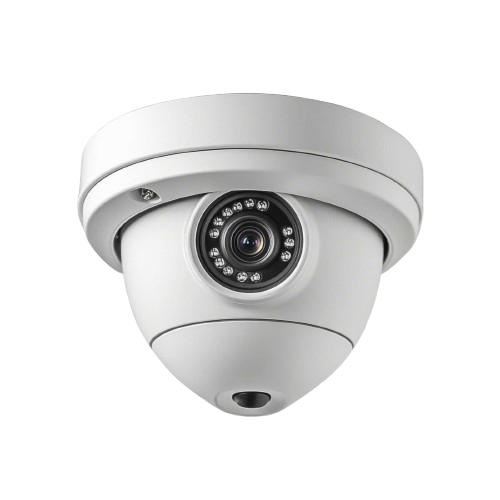
An IP camera, or Internet Protocol camera, captures video digitally and sends it over a network. It can connect through an Ethernet network and, depending on the system design, support features such as remote monitoring, intelligent motion detection, analytics and flexible recording options.
A traditional CCTV camera, particularly an analog camera, generally sends its video signal through coaxial or UTP cabling to a Digital Video Recorder (DVR), where the footage is digitized and stored. Modern analog systems can still provide remote viewing when the DVR is connected to a network.
In simple terms:
IP cameras: Camera → Network → Network Video Recorder (NVR) or other storage
Analog CCTV: Camera → Cable → DVR → Storage
Neither option is automatically right for every business. The better choice depends on your operational needs.
How IP Camera Systems Work
An IP camera is essentially a network-connected surveillance device. Instead of sending an analog video signal to a DVR, the camera processes video digitally and transmits it across the network.
This architecture gives businesses greater flexibility in how cameras are connected, managed and recorded. Depending on the equipment selected, IP camera systems can support high-definition video, remote access, motion detection, edge recording and advanced analytics.
Why Businesses Choose IP Cameras
IP cameras can be particularly useful when a business wants more than basic video surveillance.
Higher image detail:
Modern IP cameras can provide high-resolution footage, making it easier to identify faces, objects, vehicles and other important details
Remote monitoring:
Authorized users can view cameras through computers or mobile devices, allowing security teams or managers to check the premises without being physically present.
Smarter surveillance:
Depending on the camera and software, features such as motion detection, alerts and video analytics can help reduce the need to monitor every camera continuously.
Flexible storage:
Footage can be recorded through an NVR, network storage or, where appropriate, cloud-based solutions. This provides more flexibility when planning a larger surveillance environment.
Easier expansion:
For businesses expecting to add cameras, relocate departments or expand their premises, a network-based system can offer useful scalability.
How Traditional CCTV Systems Work
Traditional analog CCTV remains a practical choice for many businesses, especially where straightforward surveillance is the main priority.
The cameras transmit video to a DVR, which processes and stores the footage. Although the technology is older than IP surveillance, modern analog CCTV systems can still provide useful features, including remote access, digital recording and infrared options.
When Traditional CCTV Makes Sense
Analog CCTV may be suitable when:
The business has a limited number of cameras.
Existing coaxial cabling can be reused.
Basic monitoring is the main requirement.
The available budget needs to remain controlled.
Advanced analytics are not a major priority.
The property does not require frequent system expansion.
For a small office, shop, warehouse or other straightforward property, a well-designed analog system can still provide dependable surveillance without unnecessary complexity.
IP Camera or CCTV: Which One Offers Better Image Quality?
Image quality is often one of the first concerns for business owners, and this is where IP cameras generally have an advantage.
Because IP cameras transmit digital video, they can support higher resolutions and provide greater image detail. This can be valuable in areas where identification matters, such as entrances, reception desks, parking areas, cash-handling zones and loading points.
However, simply choosing a high-resolution camera does not guarantee useful footage.
Camera positioning, lighting, viewing angle, lens selection, installation height and recording settings all influence the final result. A professionally planned security camera system should consider the entire surveillance environment rather than focusing only on megapixels.
What About Remote Monitoring?
Remote access has become an important requirement for many businesses.
If you manage multiple locations, travel frequently or simply want to check your premises outside working hours, remote monitoring can make surveillance more convenient. Modern CCTV systems can support viewing through mobile and desktop applications when the system is correctly configured.
IP systems naturally fit into network-based environments, but remote access is not exclusive to IP cameras. Modern DVR-based CCTV systems can also provide remote viewing when connected appropriately.
The important question is not whether remote access is possible, but whether it is secure, reliable and configured according to your business requirements.
Which System Is More Cost-Effective?
Cost should be considered from two angles: initial investment and long-term value.
Traditional CCTV can be attractive when a business needs basic surveillance and already has suitable cabling infrastructure. It may provide an economical way to cover essential areas without investing in advanced network features.
IP cameras can involve a higher initial investment, particularly when upgrading network infrastructure or selecting advanced cameras and storage. However, the additional capabilities may provide greater value for businesses that need better image quality, remote access, analytics or future scalability.
Instead of asking, “Which camera is cheaper?”, ask:
What Will the System Need to Do?
Consider
How many cameras are required today?
Will more cameras be added later?
Do you need remote monitoring?
How long should footage be retained?
Are high-risk areas involved?
Do you need vehicle or number-plate identification?
Is intelligent motion detection useful?
Will multiple locations need to be monitored?
Can your existing network and cabling support the proposed system?
These questions make it easier to choose a system based on actual business needs.
What Should Your Business Choose?
There is no universal answer.
An IP camera system is often the stronger choice for businesses that want high-resolution surveillance, smarter monitoring, remote access and room to expand. It can be especially valuable for larger offices, warehouses, industrial facilities, commercial properties and businesses with more demanding security requirements.
A traditional CCTV camera system can make sense for smaller premises or businesses that primarily need dependable monitoring without extensive smart features.
There is also no rule that says every part of a business must use the same type of camera. The right surveillance design may depend on the location, lighting, risk level, viewing distance and purpose of each camera.
What Should You Consider Before Installation?
Before arranging CCTV installation in Dubai, look beyond the camera itself.
Coverage
Identify entrances, exits, reception areas, parking spaces, corridors, storage rooms and other sensitive locations that require monitoring.
Lighting
A camera that performs well during the day may produce poor footage at night. Consider low-light performance, infrared capability and lighting conditions before installation.
IP Intercoms
A camera that performs well during the day may produce poor footage at night. Consider low-light performance, infrared capability and lighting conditions before installation.
Storage
Decide how many days of footage you need and choose storage capacity accordingly. More cameras, higher resolutions and longer retention periods require more storage.
Network Infrastructure
For IP camera installation, network capacity, connectivity, PoE requirements and cybersecurity should be assessed before deployment.
Future Expansion
If your business is growing, plan for additional cameras from the beginning. A system that works today but cannot be expanded easily may become expensive to replace later.
Professional Installation
Even the best camera can underperform when it is poorly positioned or configured. Correct mounting height, camera angle, lens selection, cabling, recording settings and network configuration all contribute to the effectiveness of the final system.
Conclusion
The choice between an IP camera and traditional CCTV should be based on how your business operates, not simply on which technology is newer. IP systems offer strong advantages in resolution, scalability, network connectivity and intelligent surveillance, while traditional CCTV can remain a practical option for businesses seeking straightforward and cost-conscious monitoring.
For businesses comparing CCTV solutions in UAE, SAN Security LLC can help assess the property, security priorities and operational requirements before recommending a suitable surveillance approach. The goal is not to install the most complicated system available, but to create a reliable security setup that gives your business the visibility, control and protection it actually needs.